Subnautica 2 DNA Modification System
DNA Modification is the broad player search term for Subnautica 2's biological upgrade layer. The first real interaction is the Welcome Center Biolab, while the later Bioscanner route expands the biomod catalogue.
Updated 2026-06-09.
What DNA Modification actually means
In Subnautica 2, "DNA Modification" is best treated as an umbrella term for biomods: active and passive biological upgrades that alter movement, oxygen comfort, route recovery, and later creature-linked abilities. The exact catalogue is still patch-sensitive, so this page prioritizes unlock logic over fragile table rows.
The current stable split is simple: the Biolab introduces default biomods early, and the Bioscanner appears to be the later path for unlocking the broader catalogue. Unknown Worlds has also confirmed roadmap work on the Biomods System and passive slots, so this page should be revisited after those patches.
The three-step pipeline
- 1
Biolab
Welcome Center terminalPick the first active or passive biomod after powering the Welcome Center.
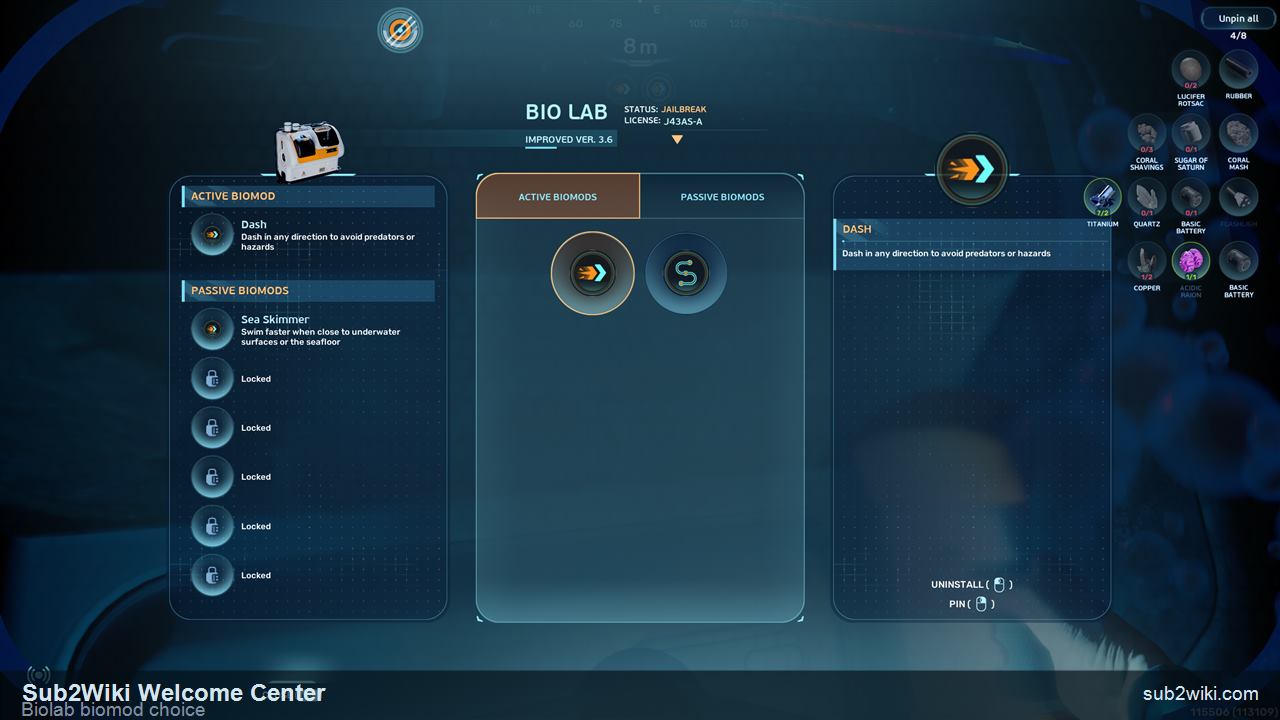
Your first upgrade stop is the Welcome Center Biolab. It offers default biomods such as Dash, Pathfinder, Sea Skimmer, and Oxygen Control before the deeper catalogue opens up.
- 2
Bioscanner
Scanner upgradeUnlock more biomod entries by scanning biological targets with the upgraded scanner.
The Bioscanner is the later route for unlocking additional biomods. Treat exact wreck routes, crafting costs, and creature-to-biomod mapping as patch-sensitive until the in-game unlock is clear.
- 3
Active and passive slots
Character upgrade layerEquip movement, oxygen, route, and other biological upgrades.
Biomods split into active abilities and passive effects. The Early Access roadmap includes Biomods System work and more passive biomod slots.
Passive trait vs active ability
Every Modification falls into one of two buckets. Most early-game unlocks are passive, while higher-tier biosamples have started producing active abilities in community reports.
Passive biomod
Always-on effect with no manual trigger.
Welcome Center choices include passive-style options such as Sea Skimmer and Oxygen Control. Future passive-slot behavior is explicitly on the roadmap, so treat slot counts as patch-sensitive.
Active biomod
Manual ability selected for route or movement comfort.
Early active choices include Dash and Pathfinder.
Confirmed modifications
Start with the Biolab choices, then use the Bioscanner route for later unlocks. Keep exact creature links and effect values flexible during Early Access.
| Source | Modification | Type | Status & Notes |
|---|---|---|---|
| Welcome Center Biolab | Dash / Pathfinder | Active | Biolab choice Biolab default choices. Best handled as early route-comfort options rather than rare creature unlocks. |
| Welcome Center Biolab | Sea Skimmer / Oxygen Control | Passive | Biolab choice Biolab default choices. Oxygen Control is the safer first pick for players repeatedly losing air during scans and gathering. |
| Bioscanner creature scans | Additional biomod catalogue | Active / passive | Later route Use the Bioscanner path before treating an individual creature-to-biomod unlock as reliable. |
Use the full catalogue when a Bioscanner scan, Biolab unlock, effect, slot type, and patch version all line up.
Scanner vs Bioscanner
The Scanner you start with and the Bioscanner upgrade answer different questions. Normal scans are enough for creature and blueprint notes; Bioscanner results are needed before calling a creature-to-biomod unlock clear.
| Aspect | Scanner | Bioscanner |
|---|---|---|
| What it gives you | Normal data entries, blueprint unlocks, and route information. | Biomod unlock checks for biological targets after the Scanner is upgraded. |
| Tool used | Standard Scanner. | Bioscanner upgrade. |
| When to care | Use from hour one for blueprints and creature knowledge. | Use after the later upgrade path when you are intentionally expanding biomod options. |
| Best use | A normal scan supports creature knowledge and blueprint planning. | A Bioscanner result supports a creature-to-biomod unlock. |
Where DNA fits in your run
The pipeline needs base power, base space, and a fabricated tool. That puts DNA somewhere between hours two and four of a normal run, not at the start.
- 0-1h: Use the normal Scanner for blueprints and creature entries. Do not chase the full biomod catalogue yet.
- 1-2h: Power the Welcome Center, open the Biolab, and pick the default biomod that solves your immediate problem.
- 2-4h: Build a small base, stabilize oxygen/material routes, and only then start planning the later Bioscanner route.
- 4h+: Use Bioscanner unlocks to expand the biomod catalogue.
Questions people ask
What is the DNA Modification System in Subnautica 2?
It is the biological character-upgrade layer players search for when they mean biomods. The route starts with the Welcome Center Biolab default choices, then expands through the Bioscanner upgrade and biological targets.
What's the difference between the Scanner and Bioscanner?
The standard Scanner gives normal databank and blueprint progress. The Bioscanner is a later upgrade used for biomod unlock checks. A normal scan is not enough to call a creature-to-biomod table row clear.
How do I get the Bioscanner?
Treat the Bioscanner as a later Scanner upgrade path tied to the Modification Station and story or wreck progression. Exact route and material requirements can shift during Early Access.
Which first biomod should I pick?
Dash is the broad movement pick. Oxygen Control is the safer survival pick if you repeatedly run out of air. Pathfinder is useful for exits and Sea Skimmer is useful for traversal, but most new saves feel Dash or Oxygen Control first.
Are biomods permanent?
Treat permanence and respec behavior as patch-sensitive. Unknown Worlds has already listed Biomods System work and more passive slots for Early Access updates, so slot and migration behavior should be checked again after each biomod patch.
Is the DNA system in Subnautica 1?
No. The DNA Modification System was prototyped and ultimately cut from the original Subnautica. Unknown Worlds brought the concept back for Subnautica 2 and built it into a full progression layer on Planet Zezura.
How many DNA Modifications are in the EA launch?
External guides now list a broader biomod catalogue, but the safest route is still selective: start with the Biolab choices, then add later unlocks when the creature, effect, slot type, and patch behavior are clear.
Related
Pages that pair with DNA Modification planning:
Biomods Hub
Early biomod choices, roadmap slot changes, aliases, and catalogue rules.
Creature Index
Potential Bioscanner targets once creature-to-biomod unlocks are clear.
Crafting Reference
Where Scanner upgrades, base tools, and progression unlocks connect.
Resource Guide
Materials for route planning and later upgrade checks.
First Hour Plan
Why DNA is intentionally a later-game goal — the first hour belongs to scanning and stability.
Beginner Survival Guide
How DNA fits into the wider early-game progression curve.
Subnautica 2 vs Subnautica 1
DNA Modifications are one of the biggest mechanical breaks from the first game.